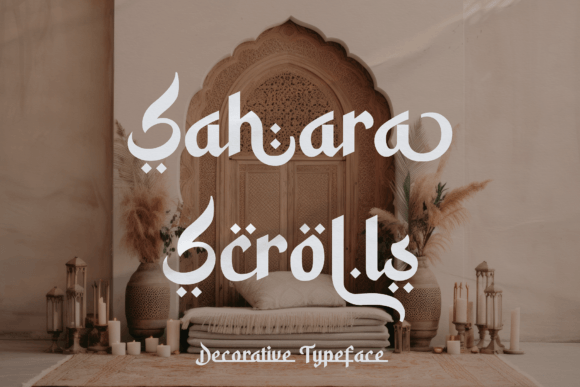
Sahara Scrolls: Capturing Desert Elegance
There is a specific kind of magic that happens when typography transcends mere legibility and becomes an atmospheric experience. Sahara Scrolls achieves this by acting as a visual bridge between the ancient artistry of Arabic calligraphy and the clean demands of contemporary graphic design. It is not simply a collection of glyphs; it is a curated aesthetic that invites the viewer into a world of ornate beauty and cultural richness. For designers and brand strategists, understanding how to leverage such a distinctive typeface can transform a standard project into a memorable piece of visual storytelling.
The visual character of Sahara Scrolls is defined by its delicate swirls and refined flourishes. It draws heavily from the flowing elegance of classical scripts, echoing the intricate motifs found in historic manuscripts, mosque architecture, and palace interiors. Yet, it avoids feeling archaic or inaccessible. Instead, it melds these traditional elements with modern sensibilities, creating a premium font that feels both timeless and current. The characters themselves are elaborate, suggesting tales of golden dunes, starlit nights, and caravans moving through ancient trade routes. This inherent narrative quality makes it more than just a tool for communication; it is an artistic voyage that adds layers of meaning to any composition.
Strategic Applications in Branding and Design
Because of its highly decorative nature, Sahara Scrolls functions best as a display font. It is not designed for long-form body text, but rather for moments where you need to capture attention and evoke emotion. Its primary strength lies in its ability to convey opulence, mystique, and heritage. This makes it an exceptional choice for projects that require a touch of luxury or cultural depth.
In the realm of logo design, Sahara Scrolls can serve as the cornerstone of a brand’s visual identity. Consider a high-end boutique hotel in Marrakech or a luxury perfume line inspired by Middle Eastern ingredients. Using this font for the logotype immediately signals sophistication and exoticism. It helps establish a strong brand identity that differentiates the business from competitors using generic, safe typography. The distinct style ensures that the brand is recognizable and memorable, fostering a deeper connection with an audience that values authenticity and artistry.
Beyond logos, the font shines in packaging design. Imagine a box of artisanal dates, a bottle of premium olive oil, or a set of specialty teas. The ornate details of Sahara Scrolls can wrap around a product, turning the packaging into a keepsake. It elevates the perceived value of the item, suggesting that what is inside is crafted with care and tradition. Similarly, in editorial design, such as book covers for historical fiction or poetry collections, the font can set the tone before the reader even opens the book. It promises a journey into a rich, textured world.
Digital applications also benefit from this creative font, provided it is used sparingly. In web design, it works beautifully for hero headers, landing page titles, or special announcement banners. For social media graphics, it can be used to create striking quote cards or event invitations that stand out in a crowded feed. However, because of its complexity, it should never be used for small text on screens where resolution might blur the delicate lines. The key is to let the font breathe, giving it ample white space so its intricate details can be appreciated.
Navigating Readability and Visual Hierarchy
One of the most critical aspects of working with a decorative script font like Sahara Scrolls is managing readability. While its beauty is undeniable, its elaborate forms can become illegible if not handled with care. This is where the concept of visual hierarchy becomes essential. By reserving Sahara Scrolls for headlines, subheads, or accent words, you create a clear distinction between the emotional hook of the design and the informational content.
To maintain professionalism and clarity, pair Sahara Scrolls with a complementary typeface. A clean, neutral sans serif font often works best as a counterpoint. The simplicity of a sans serif allows the ornate curves of Sahara Scrolls to take center stage without competing for attention. Alternatively, a classic serif font with strong vertical strokes can provide a structured foundation that grounds the fluidity of the script. Avoid pairing it with another decorative or handwritten font, as this can create visual chaos and confuse the viewer.
Testing font pairings is a crucial step in the design process. Look at how the x-heights and weights interact. Does the secondary font support the primary one, or does it fight for dominance? In modern typography, contrast is key. The stark difference between the intricate Sahara Scrolls and a minimalist sans serif creates a dynamic tension that is visually engaging. This balance ensures that the design feels intentional and polished, rather than cluttered or overwhelming.
Practical Guidance for Selecting and Licensing
Before committing to Sahara Scrolls for a client project or personal endeavor, it is important to evaluate its fit within the broader context of your design assets. Ask yourself: Does the project require a sense of history and culture? Is the target audience likely to appreciate ornate details? If the answer is yes, then this commercial font is likely a strong candidate. However, if the project demands ultra-modern minimalism or high-speed readability, it may not be the right choice.
When reviewing the font family, check what styles are included. Some decorative typefaces come with multiple weights or alternates, while others offer a single, highly stylized cut. Understanding the available options will help you determine how flexible the font is for different applications. Additionally, always verify the licensing terms. Ensure that the license covers your intended use, whether it is for print, digital, or commercial branding. Respecting intellectual property rights is a fundamental part of professional practice.
Finally, consider the technical aspects of implementation. In print, ensure that the resolution is high enough to capture the fine details of the swirls and flourishes. In digital environments, test the font across different devices and screen sizes. What looks stunning on a large desktop monitor may lose its clarity on a mobile device. Adjust sizing and spacing accordingly to maintain impact and legibility.
Ultimately, Sahara Scrolls is more than just a set of characters. It is a tool for evoking emotion and connecting with audiences on a deeper, cultural level. By understanding its strengths, limitations, and ideal applications, designers and creators can harness its power to create work that is not only beautiful but also meaningful. Whether you are crafting a brand identity, designing a book cover, or creating social media content, let the poetic beauty of this font guide your creative decisions. Dive into its mesmerizing world, and allow your designs to resonate with the rich heritage and artistic elegance it represents.