Haidek: A Versatile Typeface for Modern Design Projects
In the crowded landscape of digital typography, finding a typeface that balances aesthetic appeal with functional rigor can be a challenge for designers. Haidek emerges as a compelling solution for those seeking a font that is both contemporary and highly adaptable. Whether you are crafting a corporate identity, designing marketing collateral, or laying out a detailed brochure, the right typography sets the tone for the entire project. Haidek positions itself as an ideal choice for flyers, brochures, business cards, logos, and other design projects, offering a blend of legibility and visual interest that meets the demands of modern communication.
Understanding the Core Characteristics of Haidek
At its foundation, Haidek is designed to be legible and versatile. These are not merely marketing buzzwords; they are critical attributes for any typeface intended for professional use. Legibility ensures that the message is conveyed clearly, regardless of the size or medium, while versatility allows the font to adapt to various contexts without losing its character.
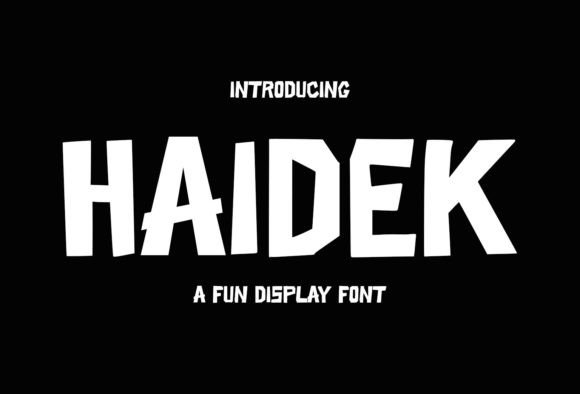
The visual structure of Haidek reflects a contemporary sensibility. It avoids the excessive ornamentation of decorative fonts, which can often hinder readability, and steers clear of the stark minimalism that sometimes feels cold or impersonal. Instead, it strikes a balance, featuring clean lines and open forms that make it visually pleasing across different applications. This contemporary edge makes it suitable for brands that want to appear current and forward-thinking without sacrificing professionalism.
One of the most significant technical strengths of Haidek is its broad character set. For designers working on international projects or those requiring special typographic elements, this feature is invaluable. A comprehensive glyph inventory means fewer compromises when dealing with multilingual text, mathematical symbols, or specialized punctuation. This reliability ensures that the visual consistency of a design remains intact, even when the content becomes complex.
Practical Applications in Professional Design
The true test of any typeface is how it performs in real-world scenarios. Haidek’s flexibility makes it a reliable choice for a wide array of design applications. Let us explore how it functions in specific contexts.
Corporate Identity and Logos
When developing a logo, designers need a font that is distinctive yet timeless. Haidek’s clean geometry allows it to scale effectively, maintaining its integrity whether it is printed on a small business card or displayed on a large billboard. Its balanced weight distribution provides a sense of stability and trust, which is essential for corporate branding. Because it is not overly stylized, it serves as a strong foundation that can be customized or paired with unique graphic elements without clashing.
Marketing Materials: Flyers and Brochures
Marketing materials require a hierarchy of information that guides the reader’s eye. Haidek excels here due to its clarity. In brochures, where large blocks of text are common, the font’s readability reduces eye strain and encourages engagement. For flyers, which often rely on bold headlines to capture attention, Haidek’s contemporary forms stand out without being aggressive. The font’s ability to handle both heavy weights for headlines and lighter weights for body text ensures a cohesive look throughout the piece.
Digital and Print Consistency
In today’s omnichannel environment, designs must translate seamlessly from screen to print. Haidek is engineered to perform well in both mediums. On digital platforms, its open counters and consistent stroke width ensure clarity on various resolutions. In print, the font retains its sharpness and detail, avoiding the blurring or loss definition that can plague poorly optimized typefaces. This dual capability simplifies the workflow for designers who need to maintain brand consistency across physical and digital touchpoints.
Who Benefits Most from Using Haidek?
While Haidek is accessible to anyone interested in design, certain professionals will find it particularly advantageous.
- Small Business Owners and Entrepreneurs: Those managing their own branding efforts need tools that are forgiving and effective. Haidek’s ease of use allows non-designers to create polished materials without extensive typographic expertise.
- Freelance Designers and Agencies: For professionals juggling multiple clients, having a versatile workhorse font like Haidek in their toolkit speeds up the initial conceptual phase. It provides a neutral yet stylish starting point that can be adapted to diverse client needs.
- Marketers and Content Creators: Individuals focused on conversion and engagement benefit from the font’s high legibility. Clear communication is key to effective marketing, and Haidek supports this by ensuring that the text is never a barrier to understanding.
- Educators and Publishers: Those producing educational materials or publications require fonts that support long-form reading. Haidek’s comfortable rhythm and spacing make it suitable for textbooks, handouts, and journals.
Evaluating Usability and Long-Term Value
When investing in a typeface, longevity is a crucial consideration. Trends in design shift rapidly, but a well-crafted font like Haidek offers long-term value by avoiding fleeting stylistic fads. Its contemporary nature is rooted in fundamental design principles rather than temporary aesthetics, meaning it is less likely to feel dated in a few years. This makes it a sustainable choice for brands looking to build a lasting visual identity.
Usability also extends to technical integration. A broad character set implies careful attention to kerning, ligatures, and language support. For designers, this means less time spent manually adjusting spacing or hunting for missing glyphs. The reliability of the font file itself contributes to a smoother workflow, reducing friction during the creative process. When a tool works as expected, it allows the designer to focus on higher-level strategic decisions rather than troubleshooting technical issues.
However, it is important to approach any design asset with a critical eye. While Haidek is versatile, it may not be the best fit for projects requiring a highly decorative or handwritten aesthetic. Its strength lies in its clarity and structure, so if a project calls for organic, irregular, or whimsical typography, other options might be more appropriate. Recognizing these limitations helps designers make informed choices, ensuring that Haidek is used where it shines brightest.
Making the Right Choice for Your Project
Selecting the right typeface is a strategic decision that impacts how your audience perceives your message. Haidek offers a robust combination of legibility, versatility, and contemporary style that makes it a strong candidate for many professional applications. Its broad character set and consistent performance across media add to its practical value, making it a reliable asset for designers and business owners alike.
Before finalizing your choice, consider the specific goals of your project. If you need a font that communicates professionalism, clarity, and modernity, Haidek aligns well with those objectives. Test it in your specific context—whether that is a digital interface, a printed brochure, or a logo mark—to ensure it meets your visual and functional requirements. By evaluating Haidek against your unique needs, you can determine if it is the right fit to elevate your design work and support your communication goals.
In conclusion, Haidek stands out as a practical and aesthetically pleasing option in the world of typography. Its ability to serve diverse design needs while maintaining high standards of quality and readability makes it a worthy consideration for anyone involved in creating visual content. By integrating such a versatile tool into your design workflow, you enhance both the efficiency of your process and the effectiveness of your final output.